
Solution 05
DM & condensate polishing (CPU)
Demineralisation plants and condensate polishing units — CPU, SCPU and DCPU — for boilers, power blocks and high-purity process users. Resin volumes and regeneration cycles are sized against your actual ionic load, so consumable cost is known before purchase rather than after.
- Ion exchange
- Mixed bed
- CPU
- SCPU
- DCPU
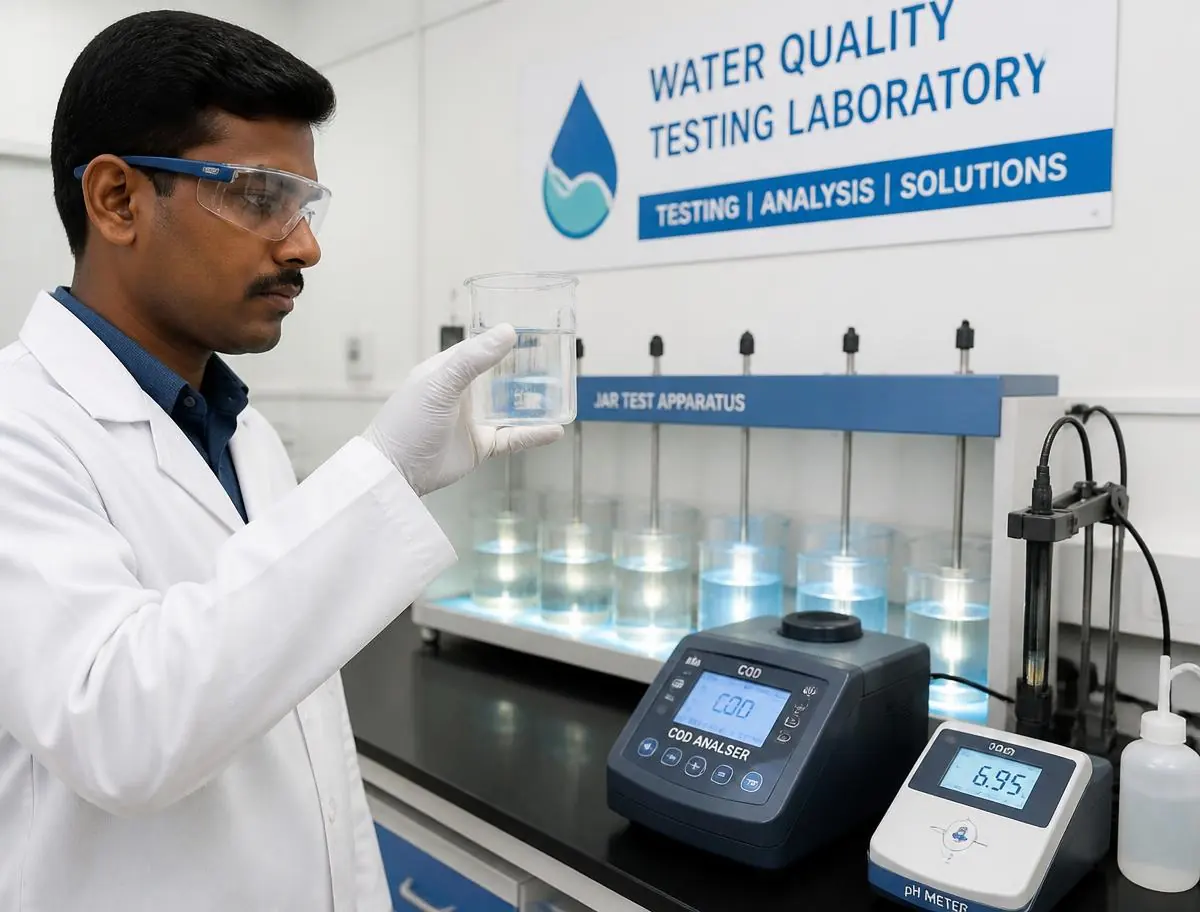
Process and technologies
Two-bed DM
Strong-acid cation and strong-base anion beds for bulk ionic removal ahead of polishing.
Mixed bed
Final polishing to below 0.1 µS/cm conductivity for boiler feed and high-purity users.
Condensate polishing
Recovers returning condensate to feed quality, protecting boiler internals from corrosion-product carryover.
Regeneration
Counter-current regeneration with acid and alkali handling, neutralisation pit and effluent routing to the ETP.
Typical performance
Inlet against outlet
Representative ranges from delivered plants. Guaranteed values are fixed against your own inlet analysis and consent conditions at proposal stage.
Industries served
- Chemical
- Sugar & distillery
- Pharmaceutical
- Power & utilities
| Parameter | Inlet | Outlet |
|---|---|---|
| Conductivity | 200–800 µS/cm | < 0.1 µS/cm |
| Silica | 5–25 mg/L | < 0.02 mg/L |
| Total hardness | 150–400 mg/L | Nil |
Reference
DM plant with condensate polishing for a specialty chemicals site
Boiler-feed demineralisation with counter-current regeneration and neutralisation. Two-bed plus mixed-bed train delivering boiler feed below 0.1 µS/cm, with counter-current regeneration cutting acid and alkali use by about 30% against co-current.
See all projectsOther systems
Sewage treatment plants (STP)
Municipal and township sewage treated to CPCB/MPCB discharge and reuse norms.
Effluent treatment plants (ETP)
Industrial effluent brought inside consent limits, with recovery designed in from day one.
Zero liquid discharge (ZLD)
No effluent leaves the boundary — water returns to process, salts leave as solids.
Request an assessment
Tell us your DM & CPU requirement.
Give us the parameters you have — flow, COD, BOD, TDS, consent conditions — and an engineer responds with a treatment scheme, a footprint and an indicative cost. No obligation, no sales sequence.
- 01
Share your inlet data
Flow, COD, BOD, TDS, pH, consent conditions — whatever you have.
- 02
Engineer reviews within 24 h
A process engineer, not a sales rep, studies the parameters.
- 03
Receive scheme + estimate
Treatment train, footprint, indicative cost and next steps.
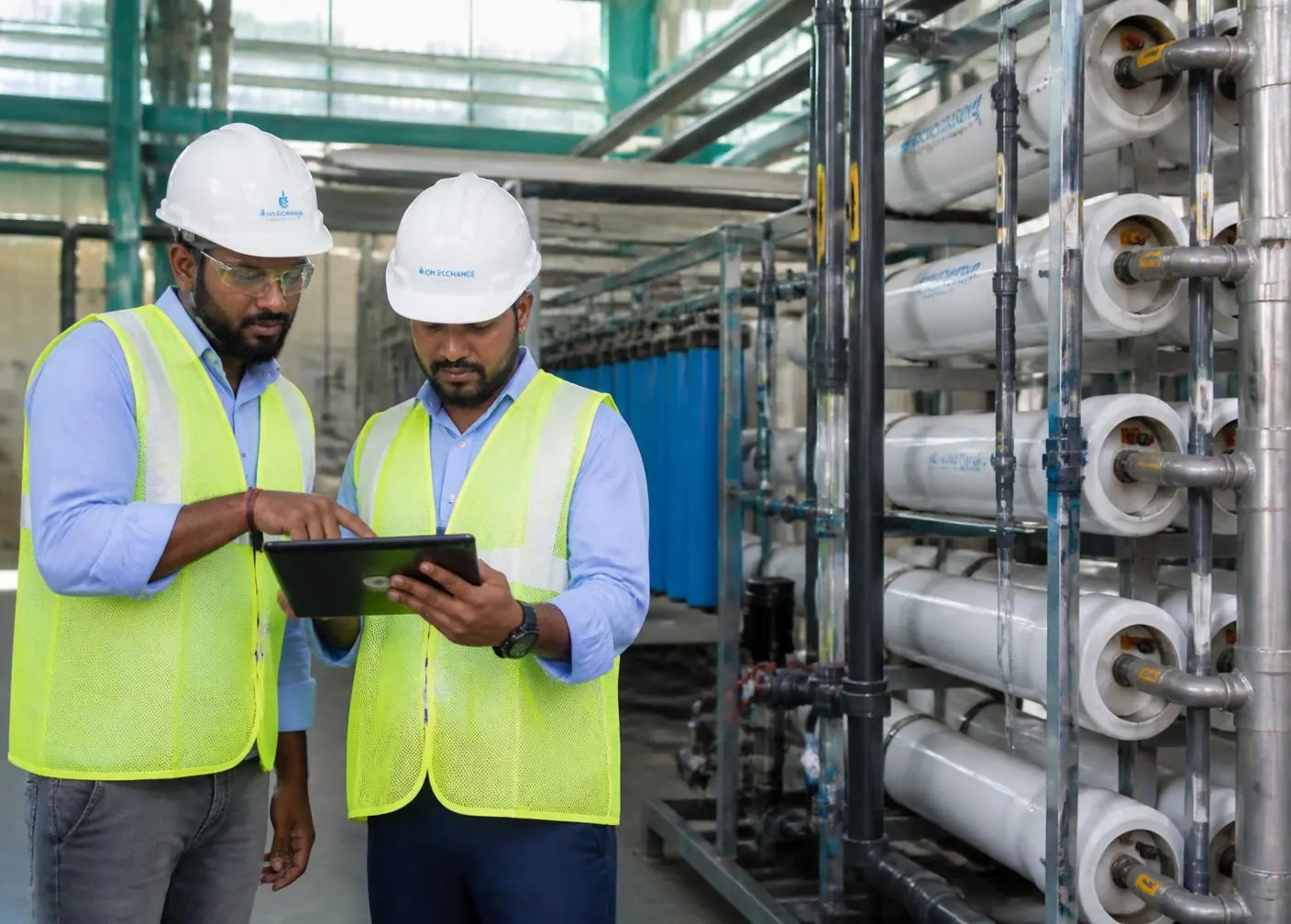
Start your assessment
All fields are reviewed by an engineer.
Typical response time: within 24 hours